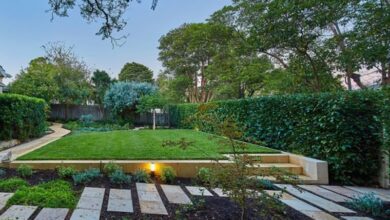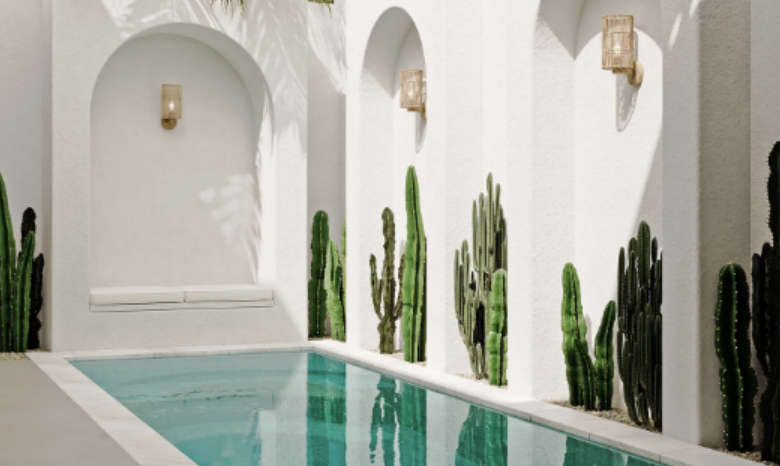
Japanese yards eschew superfluous decoration, creating a tranquil atmosphere through the exquisite combination of natural elements such as stone, wood, water, and plants. It is not only a space for viewing but also a living space that fosters relaxation and a connection with nature. Creating a Japanese yard doesn’t require a grand scale; the key lies in mastering the three core principles: “natural texture, spatial minimalism, and atmosphere creation.” Below are specific design points and implementation methods, adaptable to different house types and budget requirements.
I. Core Element Creation
The soul of a Japanese yard lies in the use of natural elements, each element needing to conform to the “simple and authentic” aesthetic, avoiding excessive embellishment.
1. Stone Elements
Stones are the core framework of a Japanese yard, primarily using “natural raw stones,” rejecting artificially carved stones.


The main stone serves as the visual focal point of the yard. Choose a large stone with a natural shape and rough texture, such as black mountain stone or Ying stone. The size of the accompanying stones should be smaller than the main stone, arranged around the main stone in a staggered manner, avoiding a straight line. In a dry landscape yard, stones can be combined with white sand. The white sand is laid in a wave pattern to simulate flowing water, with the stones acting as islands, creating an “interdependent landscape”, an evocative scene of mountains and water.
2. Water Features
Water is the dynamic element of a Japanese yard, divided into “real water” and “simulated water.” Smaller spaces can prioritize simulated water for easier maintenance.
Real water landscaping: A mini pond, bordered with light gray stone, with pebbles at the bottom. Lotus and water lilies can be planted, along with a small fountain. A few aquatic plants can be placed around the pond to enhance the natural feel.
Simulated water landscaping: Use white sand and crushed stone to create a large flat area, displaying patterns such as concentric circles or wave patterns, simulating lake ripples or streams. Combine with a few stones to create a tranquil landscape.
3. Plant Elements
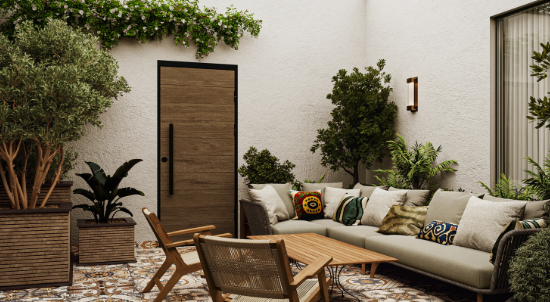
The selection of plants in a Japanese yard follows the principle of “less is more,” primarily using evergreen plants, complemented by a small number of deciduous plants, ensuring a beautiful scene throughout the four seasons. Evergreen trees can be pruned and shaped to mimic natural forms; low-lying shrubs are used to fill gaps between rocks; ground cover plants cover the ground, creating the ambiance of “moss growing on the steps”; and herbaceous plants are planted around water features or in crevices. Large areas of lawn should be avoided, replaced by moss and gravel; plant heights should gradually decrease from the inside out, creating a sense of layering; no more than three types of plants should be used in the same area to avoid cluttered colors, with green and dark green as the main colors, and a small amount of red (such as red maple) as accents.
4. Paths and Ground Surfaces
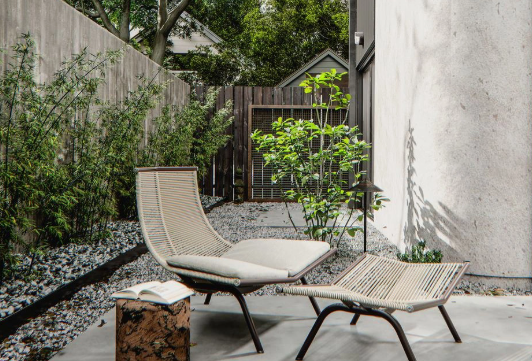
The materials for paths and ground surfaces should be simple and natural. Paths can be made of flagstones, with gaps left between the stones and filled with moss or gravel, simulating country lanes. Gravel paths can be paved with pebbles and crushed stone, creating a crisp sound when walking, enhancing the sensory experience. Wooden walkways can be used around water features or in resting areas to enhance the spatial texture.
Paths should be mainly curved, avoiding straight lines that cut through the courtyard, extending the viewing route; the ground should be clearly divided, with sand and moss in the viewing area, wooden platforms and tatami mats in the resting area, and flagstones and gravel in the path area, creating distinct layers.
II. Resting and Decorative Details
1. Resting Spaces
The resting area is the core area for experiencing the courtyard atmosphere, and the design should focus on “simplicity and comfort.” Small courtyards can have a mini tatami mat in the corner, paired with a low wooden tea table, or 2-3 wooden lounge chairs. Larger courtyards can have a wooden gazebo with a tatami mat or wooden coffee table for tea drinking and relaxation; an open-air veranda can be designed in the area adjacent to the house, with wooden seating, providing both shade and shelter from rain.
2. Decorative Elements
Japanese yards reject complex decorations; a few simple items can enhance the ambiance.
Traditional stone lanterns can be placed along paths or around water features, made mainly of bluestone and granite, illuminated with warm light at night to create a tranquil atmosphere. Bamboo elements can also be added, such as bamboo fences and bamboo screens. Bamboo fences can be used to divide areas, and bamboo screens can be used for sunshade. Avoid using brightly colored or complex decorations, such as plastic ornaments and colorful lights, which would disrupt the Zen atmosphere.
III. Design Solutions for Different Apartment Types
1. Mini Balcony/Terrace: Use white sand for the ground, place 1-2 small rocks, and complement with a small amount of moss and miniature potted plants. Create a mini stone path, and hang bamboo blinds or wooden decorations on the wall to create a compact and tranquil atmosphere.
2. Small Apartment Courtyard: Use a stone path to connect the courtyard, placing a mini pond or dry landscape on one side, and a small tatami mat or two lounge chairs on the other. Choose low-growing plants to avoid obstructing the view.
3. Large Apartment Courtyard: Place a pond or fountain in the center of the courtyard, surrounded by rocks and greenery. Design a tea yard and relaxation area on one side, complemented by bamboo fences and stone lanterns. Use alternating stone slabs and gravel for the path to create a layered and Zen-like space.
See also: How Snow Retention Impacts Winter Home Maintenance
IV. Maintenance Essentials
The core of Japanese style yard maintenance is “simplicity and convenience,” avoiding overly complicated upkeep.
Plant Maintenance: Choose plants adapted to the local climate to reduce watering and fertilizing frequency; regularly prune shaped plants to maintain their natural form; promptly remove weeds to maintain the yard’s cleanliness.
Water Feature Maintenance: Real water ponds require a filtration system, regular water changes, and cleaning of debris from the bottom; artificial sand landscapes require regular raking of the patterns and removal of dust and fallen leaves.
Ground and Decoration Maintenance: Regularly clean stone slabs and wooden platforms, and apply preservative paint to wooden elements annually; regularly wipe down stone lanterns and other decorations to maintain their rustic texture.
Conclusion
Creating a Japanese yard design is not about piling up elements, but about understanding and expressing the “natural aesthetic.” It pursues a state of “tranquility and serenity,” allowing people to find a corner of relaxation amidst the hustle and bustle through the natural combination of stone, wood, water, and plants. Regardless of the size of the space, by grasping the three core principles of “simplicity and negative space, natural simplicity, and Zen-like atmosphere,” you can create your own Japanese yard, allowing you to experience the tranquility and beauty of nature every time you stop to admire it.