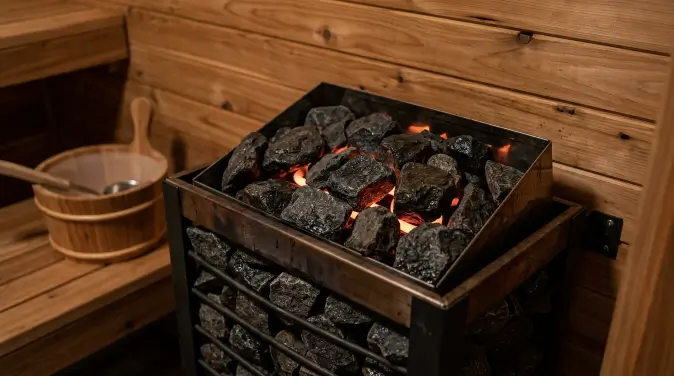
A sauna heater in a cold-winter climate needs 15 to 25 percent more kilowatt capacity than the standard sizing formula suggests, along with better wall insulation and a shorter preheat routine to control the added electric cost. A well-insulated 6 kilowatt cabin still reaches 170 degrees in freezing weather, but it takes 10 to 15 minutes longer than the same box in a mild climate. Budget an extra $10 to $20 a month in electricity once outdoor temperatures drop consistently below freezing.
How Does Cold Weather Change Heater Sizing?
The standard sizing rule of roughly 1 kilowatt per 45 to 60 cubic feet assumes a moderate outdoor temperature range. Once outside air regularly drops below 20 degrees Fahrenheit, that same cabin loses heat through its walls and door seal faster than the formula accounts for, so most manufacturers recommend adding 15 to 25 percent more capacity for a genuinely cold climate. A cabin sized at 6 kilowatts for a mild region often needs 7 to 7.5 kilowatts once winter lows become the normal operating condition rather than the exception. Skipping this adjustment does not make the heater unsafe, it just means longer preheat times and a unit that runs at full output more often, which shortens element life over several winters.
Electric Heat Versus Wood Heat: Which Handles a Real Cold Snap Better?
Electric heaters hold a set temperature more consistently once a cabin is insulated and sealed, and most models include a digital control that compensates automatically as outdoor conditions shift through the evening. A wood-fired heater burns hotter at the stones and produces a different, drier heat that some longtime users prefer, and it keeps working through a power outage, which matters in regions where winter storms take down the grid for days at a time. The tradeoff is labor and mess: a wood unit needs seasoned, kiln-dried fuel stored dry through the winter, regular ash removal, and a chimney with clearances to combustibles that must be checked before the cold season starts. Buyers who value convenience and a lower ongoing cost per session generally land on electric; buyers in storm-prone areas who already split their own firewood often stick with wood.


What Insulation and Sealing Work Actually Matters Before Winter?
A heater upgrade is the expensive fix for a problem that a $200 sealing job often solves on its own. Check the door gasket first, since a worn seal is the single biggest source of heat loss in an older cabin, followed by any gap around the vent or window trim. Adding a vapor barrier behind the interior cedar paneling, if the cabin was not built with one, keeps humidity from condensing inside the wall cavity and freezing during hard cold snaps. None of this is glamorous work, but it is the reason two cabins with identical heaters can perform very differently once the temperature drops, and it is far cheaper than jumping straight to a larger heater.
What Does a Cold-Climate Setup Cost to Run Each Month?
A 6 kilowatt electric heater used four sessions a week typically adds $15 to $25 a month to a power bill in a mild climate, and $25 to $45 in a genuinely cold one, mostly from longer preheat cycles rather than a hotter target temperature. Shopping heater models by rated wattage and stone capacity side by side, whether through a local dealer or a specialty retailer like SweatDecks, makes it easier to compare the true cold-weather output of a 7 kilowatt unit against a 6 kilowatt one before deciding whether the size step is worth the extra $150 to $300 on the sticker price. A slightly larger heater that reaches temperature faster in January often pays for itself in electricity saved over a full winter of use.
What Outdoor Plumbing and Electrical Details Get Missed in Winter?
Any water line run out to a cabin, whether for an outdoor shower or a cold rinse station, needs to sit below the local frost line or be drained completely before the first hard freeze, since a burst line is a far more expensive fix than any heater upgrade. The electrical disconnect switch required by most local codes should be rated for the coldest temperature the site actually sees, not just a generic outdoor rating, and any exposed conduit benefits from a quick fall inspection before the ground freezes solid. None of this is unique to sauna heaters, but a cabin built without winter in mind tends to reveal every one of these gaps during the first real cold snap rather than gradually.
What Does the Research Say About Cold-Weather Sauna Use?
The cardiovascular research on regular sauna bathing does not distinguish by climate, since the studies track session frequency rather than outdoor temperature. A systematic review in Evidence-Based Complementary and Alternative Medicine found consistent associations between regular dry sauna sessions and favorable cardiovascular markers across the reviewed studies. An older paper in The American Journal of Medicine outlined both the benefits and the risks of sauna bathing, a useful frame for anyone using a heater through an unfamiliar cold season for the first time. A 2023 review in Mayo Clinic Proceedings looked at how sauna bathing interacts with other lifestyle factors, finding some added benefit when combined with regular exercise, which is relevant since cold-climate users often pair a sauna session with an outdoor cold exposure routine. These remain association-level findings, not a guarantee tied to any single season or setup.
See also: Business Professionals: What to Look for in a File Share Connector Service
What About Roof Design and Snow Load in a Cold Climate?
A cabin roof in snow country needs a steeper pitch, typically 4/12 or higher, so snow sheds on its own rather than piling up and adding structural load the frame was never designed to carry. Any exterior heater vent needs to stay clear of drifting snow, since a blocked vent affects combustion air on a wood-fired unit and can restrict airflow around an electric heater’s housing during a heavy storm. A cabin sited too close to the eave line of a nearby structure can also collect roof runoff and ice buildup against its own wall, which is worth checking before the first snow falls rather than after ice has already formed against the siding. None of this changes the heater itself, but it protects the investment the heater sits inside through a full winter season.
Frequently Asked Questions
Does a sauna heater need to be bigger in a cold climate? Usually by 15 to 25 percent over the standard kilowatt-per-cubic-foot formula, since a cabin exposed to sub-freezing air loses heat through the walls faster than the same box in a mild climate.
Is electric or wood heat better for winter use? Electric heaters hold temperature more consistently once the cabin is insulated. Wood-fired heaters run hotter and keep working through a power outage, which appeals to buyers in storm-prone regions.
Do pipes and electrical lines need winter protection outdoors? Any water line needs to be buried below the frost line or drained before freezing weather. The disconnect switch and exposed conduit should be rated for the local low temperature.
How much more does it cost to run a heater through a cold winter? A 6 kilowatt electric heater used four times a week typically adds $25 to $45 a month in a cold climate, compared to $15 to $25 in a mild one.
References
- Clinical Effects of Regular Dry Sauna Bathing: A Systematic Review, Evidence-Based Complementary and Alternative Medicine, 2018
- Benefits and risks of sauna bathing, The American Journal of Medicine, 2001
- Does the Combination of Finnish Sauna Bathing and Other Lifestyle Factors Confer Additional Health Benefits? A Review of the Evidence, Mayo Clinic Proceedings, 2023
By Owen Tillman